Every SaaS founder hits the same wall eventually: your user base is growing faster than your support team can keep up. Hiring locally is slow and expensive, and a single generalist inbox stops working the moment you have onboarding questions, billing disputes, and API errors landing in the same queue.
This is exactly why so many SaaS companies now build their customer support desks with a Filipino offshore team, one that’s structured properly from day one rather than bolted on as an afterthought.
A world-class SaaS support desk isn’t just cheaper headcount. It’s a deliberate system of roles, tiers, and service-level agreements (SLAs) working together so customers get fast, accurate answers no matter what time zone they’re in.
Why SaaS Companies Are Rethinking Support
The math behind traditional in-house support no longer holds up as user bases scale. Some data points worth considering:
| ● Roughly 38% of businesses now outsource their customer service function, making it the single most commonly outsourced business process globally. PwC Global Outsourcing Survey.
● Companies that outsource report average labor cost reductions of around 45% in their first year, alongside roughly 60% lower training and onboarding costs. Deloitte Global Outsourcing Survey.
● 62% of companies report improved CSAT scores after outsourcing, provided the transition is paired with strong documentation and QA. Deloitte.
● Outsourced teams with solid escalation protocols and QA routinely achieve first-contact resolution above 75%, compared to under 65% for teams without that structure. StealthAgents. |
The numbers tell a clear story: outsourcing works when it’s structured well, and falls flat when it isn’t. Structure is the differentiator.
Building the Right Tiers
A robust helpdesk separates issues by complexity so the right person handles the right ticket:
| Tier |
Focus Area |
Description |
| Tier 1 – Front Line |
Password resets, onboarding questions, basic how-tos |
Fast response times matter most here, and most tickets should resolve without escalation. |
| Tier 2 – Technical Support |
Billing disputes, integration issues, product bugs |
Bridges the gap between customer-facing communication and technical troubleshooting. |
| Tier 3 – Specialist / Engineering Liaison |
Complex API issues, data discrepancies |
Reserved for anything requiring direct input from your product or engineering team. |
Layering these tiers with a Filipino offshore team lets you staff Tier 1 and Tier 2 around the clock at a fraction of the cost of an in-house equivalent, while keeping your core product team focused on building rather than firefighting.
Related: How to Scope Roles for Your Filipino Remote Team So They Actually Succeed
SLAs That Actually Mean Something

SLAs only work when they’re specific and monitored. A well-designed SaaS support desk typically sets:
- First response time targets (e.g., under 1 hour for urgent tickets, under 24 hours for general queries)
- Resolution time targets by tier and severity
- CSAT and first-contact resolution benchmarks reviewed monthly
- Escalation paths clearly documented so no ticket sits untouched
These aren’t just internal metrics, they’re commitments that shape how much your customers trust your product during their first hard moment with it.
Related: Why Australian SaaS Startups Are Quietly Building Filipino Remote Teams
The Process Behind the People
Roles and SLAs only work with the process behind them: a shared knowledge base, a clear escalation matrix, tagging conventions for reporting, and regular QA reviews. This is where an experienced Filipino support team adds real value; agents who’ve supported SaaS products before already understand ticket triage, tone, and how to de-escalate a frustrated user without sounding scripted.
It’s also worth remembering that AI tools now handle a growing share of routine queries. However, they still need human oversight to catch context AI misses, audit responses, and handle anything emotionally nuanced. The best support desks pair AI efficiency with human judgment, not one instead of the other.\
Amplifying Recruitment and Screening With AI
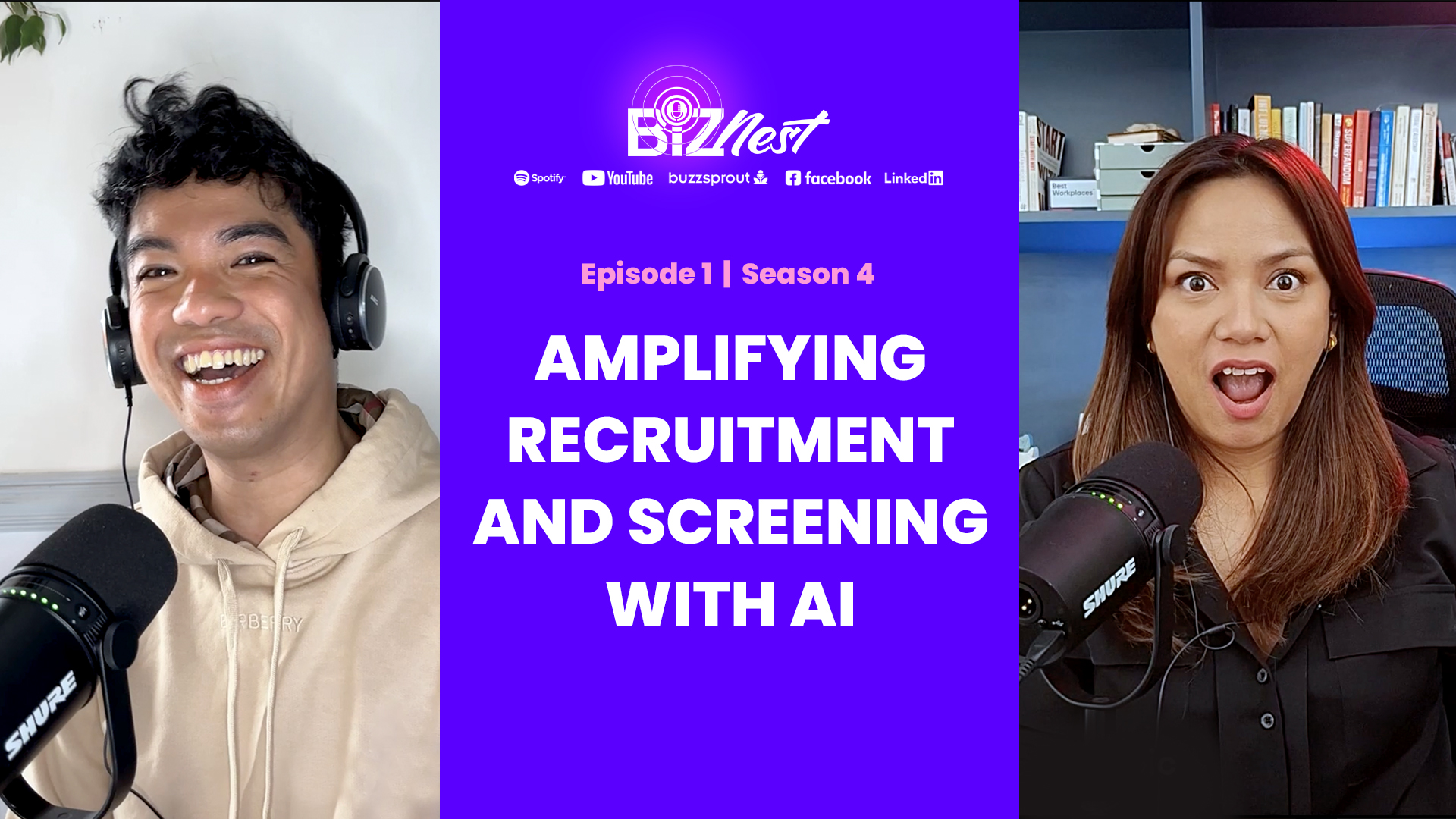
Watch the full episode here.
If you’re exploring what else can be layered onto a support function, related capabilities like finance support, sales and marketing support, and general virtual assistance often complement a growing SaaS operation well. You can browse the full range of services here, and find more guides like this one in our resources and articles sections.
Bringing It Together
Designing a world-class support desk isn’t about finding the cheapest labor, it’s about designing the right roles, tiers, and SLAs, then staffing them with people who genuinely understand SaaS. A Filipino SaaS support team, built this way, becomes less like an outsourced vendor and more like an extension of your own team.
About Virtua Solutions Outsourcing
Virtua Solutions Outsourcing is a boutique BPO built for startups and SaaS companies that need support without the overhead of building an in-house team from scratch. We don’t offer one-size-fits-all packages; we work with what you actually need, whether that’s a single support specialist or a fully tiered helpdesk.
We see ourselves as an extension of your team first, because collaboration, not just cost savings, is what makes outsourced partnerships succeed and keeps our people invested in your growth.
If outsourcing is new to you, and for most startups it is, we hold your hand through it, recommending what actually fits your stage and needs rather than upselling you on more than you need. Curious what this could look like for your company?
Related Resources: