For CTOs and COOs at SaaS companies, handing off operations to an offshore team can feel like a leap of faith — especially when customer data, compliance requirements, and company reputation are on the line. The concern is valid. But outsourcing data security for SaaS doesn’t have to be a vulnerability. When done right, it’s a strategic advantage.
Here’s what you need to know before you outsource, and how to make sure your team — wherever they’re based — meets the security and compliance bar your customers expect.
Why Security Concerns Arise with Outsourced Teams
When companies first explore outsourcing their SaaS operations, data security is usually the first objection on the table. And it’s a fair one.
Offshore teams often handle sensitive workflows — from customer service and finance operations to sales and marketing support. These functions can touch customer PII, billing data, CRM records, and internal systems. Without the right protocols, that exposure creates risk.
But the risk isn’t unique to outsourcing — it’s a people and process problem. An in-house employee with poor security hygiene is just as much of a liability as a poorly vetted offshore contractor.
Related: Cybersecurity in Outsourcing: Essential Measures for Businesses
The Numbers Behind the Risk (and the Opportunity)
Understanding the landscape helps. Here’s what the data says:
- 60% of small businesses that suffer a cyberattack close within six months. Poor security practices, not just outsourcing, are the culprit. (National Cybersecurity Alliance)
- The global average cost of a data breach in 2023 was $4.45 million, a record high. Human error remains the leading cause. (IBM Cost of a Data Breach Report 2023)
- 95% of cybersecurity breaches are caused by human error. This applies equally to in-house and outsourced teams without proper training. (World Economic Forum, Global Risks Report)
- Only 32% of companies have fully documented their data governance policies, leaving gaps that increase compliance exposure. (Gartner)
- The Philippines ranks among the top BPO destinations globally, with a strong regulatory framework under the Data Privacy Act of 2012 (Republic Act 10173), which aligns closely with GDPR principles. (National Privacy Commission PH)
The takeaway: the threat isn’t geography. It’s governance.
What Secure Outsourcing in the Philippines Actually Looks Like
Secure outsourcing in the Philippines means more than just signing an NDA. A legitimate offshore partner should be able to demonstrate several concrete practices before you onboard them.
- Access controls and role-based permissions. Your offshore team should only see what they need to see. That means scoped system access, multi-factor authentication, and regular access audits.
- Data handling agreements. A strong Data Processing Agreement (DPA) aligned with GDPR, CCPA, or HIPAA (depending on your market) is non-negotiable. If your partner can’t produce one, that’s a red flag.
- Device and endpoint security. Managed devices, VPNs, screen recording policies, and clean desk protocols are standard in reputable BPOs — not extras.
- Staff vetting and training. Background checks, security awareness training, and regular refreshers should be part of any offshore team’s onboarding.
- Incident response protocols. If something goes wrong, you need a clear plan. Ask potential partners: What’s your breach notification process?
Related: Securing Data, Improving Solutions: Virtua Trains For Data Privacy
Compliance Frameworks to Keep in Mind
Depending on where your customers are located, your SaaS operations may fall under one or more of the following:
- GDPR (EU/UK) requires that any third party processing EU citizen data — including offshore teams — operate under a valid data processing agreement and implement appropriate technical safeguards.
- CCPA (California/US) gives consumers rights over their data and requires businesses to disclose data sharing practices, including with service providers.
- SOC 2 is a common audit framework for SaaS companies. If your company is SOC 2 certified or working toward it, your offshore team’s workflows need to be scoped into your controls environment.
- HIPAA applies if you’re in health tech. Any offshore team handling PHI needs to be covered under a Business Associate Agreement (BAA).
Working with a virtual assistance or operations partner who understands these frameworks — or is willing to align with them — is foundational to SaaS compliance outsourcing done right.
Related: How to Choose the Right Outsourcing Partner: A Guide for Canadian Tech Firms
Practical Steps Before You Outsource
Before signing with any offshore partner, run through this checklist:
✅ Request their security policy documentation
✅ Clarify who owns the data and what happens to it if the contract ends
✅ Define acceptable use policies for company systems
✅ Establish audit rights — you should be able to review their practices periodically
✅ Include security obligations in the contract, not just the NDA
If you’re new to outsourcing, this can feel overwhelming. That’s normal. A good partner will walk you through it — not just hand you a stack of forms.
Outsourcing Doesn’t Mean Losing Control
The most common misconception about offshore teams is that outsourcing means giving up visibility. It doesn’t. The right partner operates as an extension of your team — present in your tools, aligned with your processes, and accountable to your standards.
Explore more insights on building high-performing remote operations on the Virtua Solutions blog or learn about collaborative team models at BizNest.
About Virtua Solutions Outsourcing
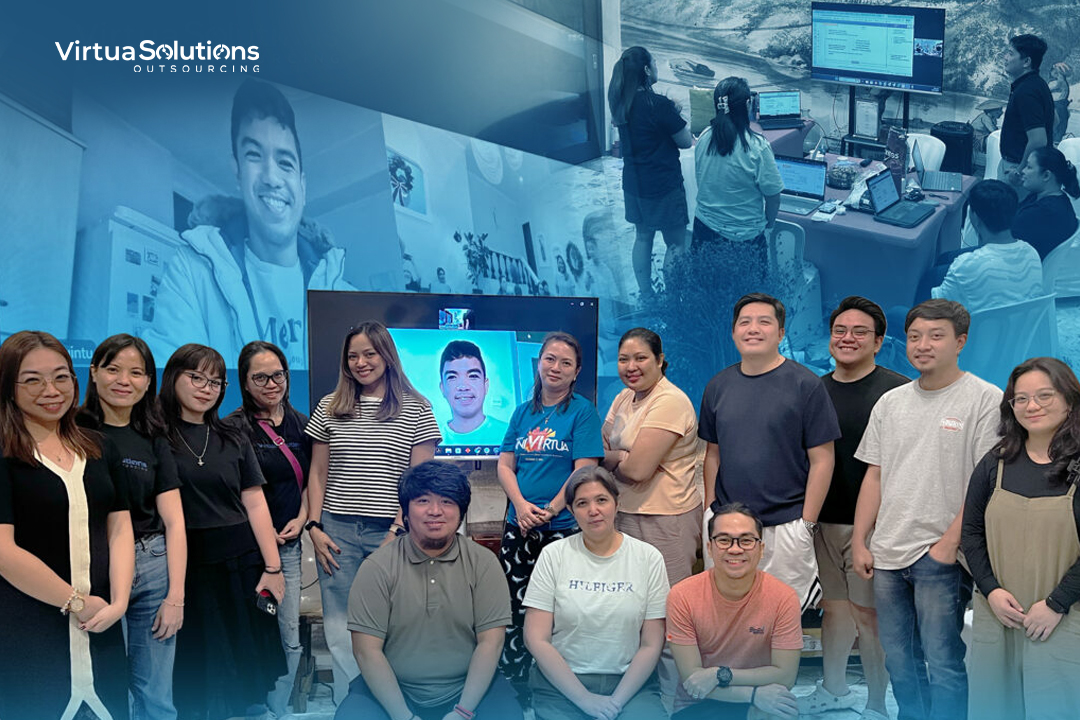
Virtua Solutions Outsourcing is a boutique BPO based in the Philippines, built specifically for SaaS startups and growing tech companies across North America, Canada, Australia, the UK, and the rest of Europe.
What makes us different isn’t just where we’re located — it’s how we work. We don’t believe in transactional outsourcing. We embed ourselves in your operations, learn your tools, and show up as a genuine part of your team. Collaboration isn’t a buzzword for us; it’s how we’re wired.
Virtua Solutions Outsourcing Strengthens 2026 Strategy by Doubling Down on SaaS and Startup Expertise
We’re also pragmatic about AI. Your AI tools still need human oversight — someone to prompt, audit, and quality-check the output. Our team provides exactly that: skilled Filipino professionals who work with your technology stack, not around it.
For founders and operators who are new to outsourcing, we don’t just hand you a team and wish you luck. We guide you through best practices, help you structure workflows securely, and make sure the transition actually sticks.
Filipino talent is world-class. We’re here to bring it to your company — and to make sure the partnership is built on trust from day one.
Ready to explore what secure, compliant outsourcing looks like for your SaaS company?
Related Resources: