For mid-market SaaS founders and CTOs, customer churn isn’t just a metric, it’s a direct threat to growth and profitability. The average churn rate for B2B SaaS companies in 2025 is 3.5%, but small to medium-sized SaaS businesses typically see monthly churn rates between 3% and 7%. When you’re scaling rapidly and every customer counts, those percentages translate to real revenue loss and stunted growth.
When you’re scaling rapidly and every customer counts, those percentages translate to real revenue loss and stunted growth.
The connection between product quality and customer retention is undeniable. Bugs, slow deployments, and unreliable software directly impact satisfaction and ultimately, your bottom line. In fact, increasing customer retention rates by just 5% can increase profits by between 25% and 95% (Zippia.com, 2023).
This is where strategic outsourcing of Quality Assurance (QA) and DevOps functions can transform your retention strategy.
The Hidden Cost of Poor Product Reliability
Before diving into solutions, let’s acknowledge the problem: churn rates in B2B SaaS peaked at 4.4% in 2023 before dropping to 4.2% in 2024. For mid-market SaaS companies operating on tight margins, even small improvements in retention can dramatically impact profitability. Increasing customer retention rates by just 5% can increase profits by between 25% and 95%.
The challenge intensifies when you consider that 36% of companies emphasize the first three months as critical for retention, with churn rates steadily declining from 10% in Month 1 to 4% in Month 3. Your onboarding period is make-or-break, and product reliability during this window is crucial.
Related: Overcoming SaaS Customer Service Roadblocks Through Outsourcing
How QA Excellence Translates to Customer Satisfaction
Quality assurance isn’t just about catching bugs, it is about protecting your customer relationships. The data is compelling:
- In a study of more than 150K+ customer interactions, MaestroQA found that high QA scores correlate with increased positive customer satisfaction scores (CSAT). Positive CSAT reviews were received 99% of the time by organizations with high/excellent QA scores (LinkedIn QAonCloud)
- Teams who integrate testing as a partnership with the entire development process spend 22% less time on unplanned work (Testlio)
- Teams who have been successful at the shift-left approach to QA are able to devote 49% of their time to developing new features that will delight customers, as opposed to other teams who can only devote 38% of their time to new work (Testlio)
- Usability improvements can increase customer satisfaction scores by up to 70% (MoldStud)
When your QA process is robust, customers experience fewer frustrations, smoother workflows, and higher confidence in your product. This directly translates to lower churn.
Related: Startup Business Secrets To Optimizing Your SaaS Sales Team
The DevOps Advantage: Speed Meets Stability
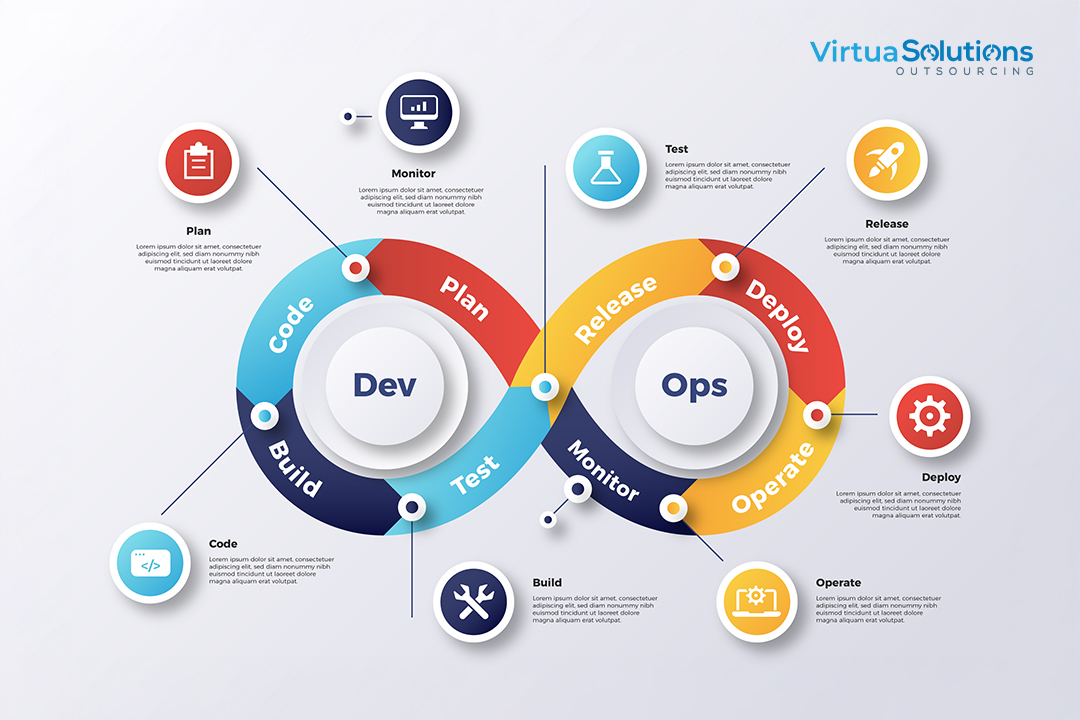
DevOps practices fundamentally change how quickly you can respond to customer needs while maintaining product stability. The statistics speak for themselves:
- 87% of companies say DevOps positively impacted customer satisfaction rates (Hutte)
- 3 out of 4 companies see improved customer satisfaction after adopting feedback loops in development (Hutte)
- Continuous integration, a DevOps practice, led to 55% fewer defects in software products (Hutte)
- High-performing product teams outperform the low-performers by 200x the frequency of deployments (Testlio)
Elite performers deploy code multiple times per day, while high performers deploy between once per day and once per week. This deployment frequency allows teams to fix issues faster, deliver features more rapidly, and respond to customer feedback in real-time—all critical factors in reducing churn.
Related: The Real ROI: Comparing In-House vs. Outsourced Tech Teams in North America
Why Filipino Tech Talent Excels in QA and DevOps
The Philippines has emerged as a premier destination for outsourced tech talent, particularly in QA and DevOps roles. Here’s why:
Technical Proficiency in Modern Stacks
As of 2024, the top tech skills in demand in Manila, Philippines are data analysis, artificial intelligence (AI), software development, cybersecurity, and cloud computing.
Java, Python, and JavaScript are crucial programming languages for software development. Filipino developers are well-versed in the exact technologies mid-market SaaS companies rely on—from React and Angular to AWS, Azure, and modern DevOps toolchains.
The Philippine IT-Business Process Management (IT-BPM) industry recorded impressive revenues of USD 38 billion in 2024, a 7% increase from 2023, demonstrating the maturity and scale of the tech ecosystem.
English Proficiency and Cultural Alignment
The country consistently ranks among the top in Asia for English language skills. This fluency facilitates seamless communication, reduces misinterpretations, and streamlines collaboration between globally distributed teams. For distributed SaaS teams operating across time zones, clear communication is non-negotiable.
Related: Why US SaaS Companies Are Turning to Philippine Outsourcing for Scalable Customer Support
Cost-Effectiveness Without Compromise
While a senior full-stack developer in the US might command upwards of $10,000 per month, and in the UK around $6,500, similar talent in the Philippines can be hired at a fraction of that cost. This cost advantage allows mid-market companies to build robust QA and DevOps teams without the budget constraints of Silicon Valley hiring.
Strong Work Ethic and Adaptability
Filipino professionals are known for their strong work ethic, adaptability, and dedication. They generally exhibit a high degree of cultural compatibility with Western business practices, making team integration smoother and more productive.
The Measurable ROI of Strategic Outsourcing

When you combine Filipino QA and DevOps talent with a strategic approach to SaaS customer churn reduction outsourcing, the results compound:
- Faster Time-to-Resolution: Dedicated QA teams catch issues before they reach production, reducing customer-facing bugs that trigger churn.
- Continuous Deployment Capability: DevOps expertise enables the rapid deployment cycles that keep you competitive and responsive to customer needs.
- Scalable Quality: As you grow, your outsourced team scales with you, maintaining quality standards without the overhead of constant hiring.
- Focus on Core Innovation: Your in-house team can focus on product strategy and innovation while your outsourced team handles the critical but time-intensive work of testing and deployment optimization.
Implementation Strategy for Maximum Impact
For CTOs and founders considering this approach:
Start with Assessment: Identify your current pain points. Are deployment cycles too slow? Are customer-reported bugs increasing? Is your team spending more time firefighting than innovating?
Build Hybrid Teams: The most successful implementations combine in-house product knowledge with outsourced technical execution. Your outsourced QA and DevOps teams should work as an extension of your core team, not a separate entity.
Invest in Integration: Use collaborative tools, establish clear communication protocols, and ensure your outsourced team has direct access to your development environment and customer feedback channels.
Measure and Iterate: Track not just technical metrics (deployment frequency, defect rates) but also business metrics (customer satisfaction scores, churn rates, time-to-resolution for customer issues).
The Bottom Line

In the competitive SaaS landscape, customer retention is the ultimate growth lever. With sales slowing, companies with strong Net Revenue Retention (NRR) are best positioned to grow efficiently.
By leveraging an outsourced QA and DevOps remote team strategy with Filipino tech talent, mid-market SaaS companies can achieve the product reliability and deployment speed that keep customers satisfied and subscribed.
The technical team outsourcing benefits extend beyond cost savings, they’re about building a sustainable competitive advantage through superior product quality and customer experience.
In an era where customer experience will soon overshadow price and product as the key brand differentiator, investing in robust QA and DevOps capabilities is not just a helpful option; instead, it is an essential element for survival.
Scale Your SaaS with Confidence
At Virtua Solutions Outsourcing, we specialize in building dedicated Filipino QA and DevOps teams that integrate seamlessly with your product development cycle. Our tech talent doesn’t just test and deploy, they become strategic partners in your mission to deliver exceptional customer experiences.
Serving SaaS, Tech, Real Estate, and Marketing industries across the US, Canada, Australia, and EMEA, we understand the unique challenges of mid-market scaling.
Our professionals bring technical expertise in modern stacks, English proficiency for seamless collaboration, and the reliability you need to drive down churn and accelerate growth.
Ready to optimize your tech stack and reduce customer churn?