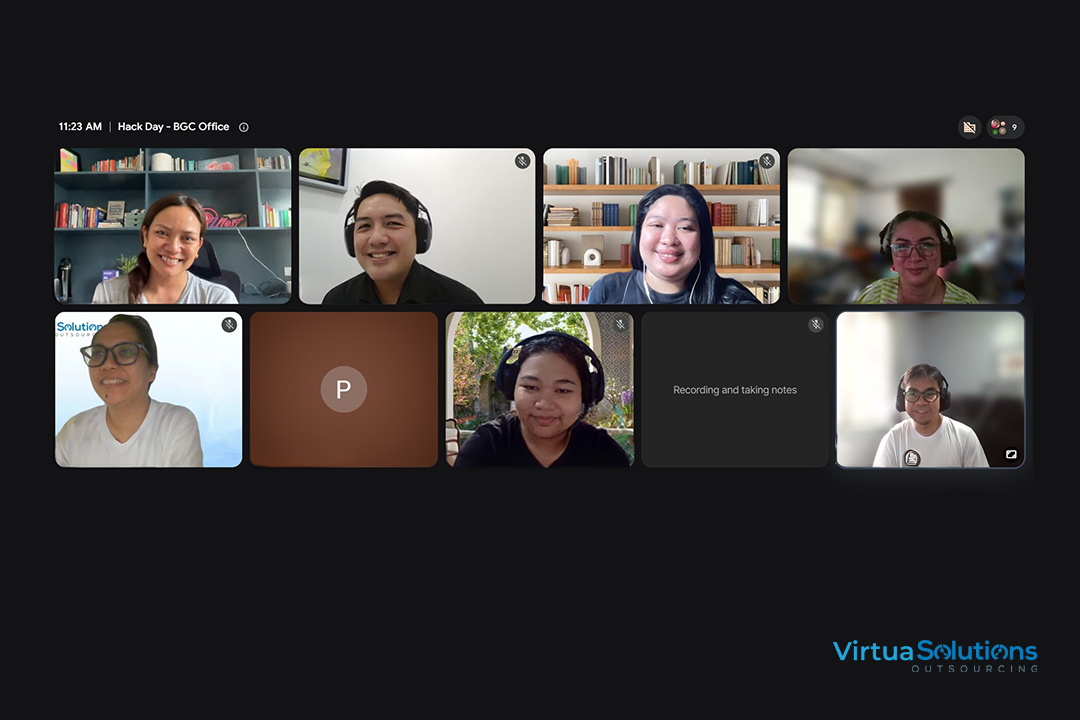
What if that automation request that has been on your wish list for months could finally come to fruition? Or at least become one of the top candidates for automation? September 22, 2026, was a special day for pitching ideas to make day-to-day processes more efficient. Virtua Outsourcing Solutions organized a Hack Day dedicated to identifying areas where automation could help streamline processes.
All departments were welcome to propose projects they deemed beneficial to completing tasks and supporting the company’s overall success. At present, two GoHighLevel (GHL) admins are in charge of automation, but other apps and software can also be used for this purpose. To promote growth and support continuous improvement, Virtua is working toward developing strategies that make the team’s work more efficient by saving time or reducing costs.
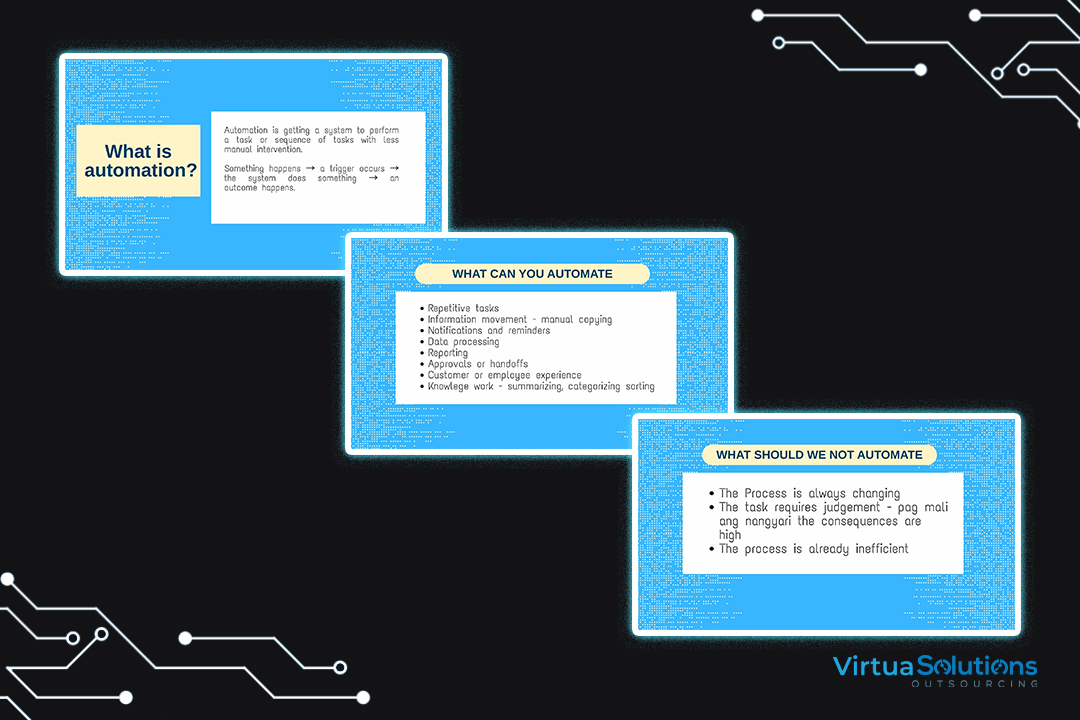
However, not all processes are suitable for automation. Areas to consider include repetitive tasks, data processing, reporting, approvals, customer or employee experience, knowledge work, notifications and reminders, and the transfer of information.
If a process is inefficient, constantly changing, or requires human judgment, it may need further review before automation can be considered.
To elaborate, here are 15 house rules for automation.
1. Build for a Real Problem
Start with an actual pain point, repetitive task, bottleneck, or manual process. No automation just for the sake of automation.
2. Think Before You Automate
Don’t automate a broken process. Ask: Can we simplify, eliminate, or redesign the process first?
3. Small Wins Count
You don’t need to build a massive system. An automation that saves 10 minutes a day can be valuable if it happens often enough.
4. Done Is Better Than Perfect
The goal is to build and test something today. It doesn’t have to be production-ready.
5. AI Is a Tool, Not the Goal
Use AI where it genuinely adds value. Automation can be as simple as a workflow, form, trigger, integration, template, notification, or database update.
6. No Sacred Processes
You are allowed to question how we currently do things.
7. Share Knowledge, Not Just Outputs
If you discover a useful tool, prompt, workflow, integration, or technique, share it with the team.
8. Collaboration Beats Competition
Help each other. Pair up when a problem requires different skills. The goal is collective improvement.
9. Keep Data and Security in Mind
Do not put confidential client, employee, financial, password, or sensitive company information into tools that are not approved for that type of data.
10. Test Before You Trust
Every automation needs a test. Check what happens when the input is wrong, missing, incomplete, duplicated, or unexpected.
11. Keep a Human in the Loop When Needed
Not every decision should be fully automated. For customer-facing, financial, HR, compliance, or high-impact processes, determine where human review is necessary.
12. Document What You Build
Use the document provided to record what you build.
13. Don’t Create Automation Nobody Will Own
Every useful automation needs someone responsible for maintaining it after Hack Day.
14. Failure Is Useful
If your idea doesn’t work, that’s still a result. Capture what you learned so someone else doesn’t have to start from zero.
15. Have Fun. Experiment. Break Things.
Today is permission to try things we normally don’t have time to explore.
Hack Day is one of the many activities and events that Virtua will continue to organize to address process gaps and ensure the team benefits from automation and developments.