

Season 4 | Episode 4
Ownership Mindset: How To Own The Outcome
July 7, 2026
00:40:20
Table of Contents
Most employees are stuck in a “getting-things-done” cycle, but completely missing the bigger picture. Ticking off a to-do list seems to equate to taking ownership, but there is more to that than meeting deadlines, completing tasks, and keeping projects moving.
In this episode of BizNest, Penny and Francis explore the difference between simply completing tasks and truly owning outcomes. They discuss why an ownership mindset is one of the most valuable qualities in any employee, how leaders can cultivate it within their teams, and why businesses that embrace ownership consistently perform better than those that don’t.
Ownership Is About Delivering Results
One of the biggest misconceptions in the workplace is that completing assigned work automatically demonstrates ownership.
Penny explains that ownership goes beyond checking tasks off a list. It means understanding the bigger picture, anticipating problems, and taking initiative to ensure the intended outcome is achieved.
Rather than simply asking, “What do I need to do?”, employees with an ownership mindset ask questions like:
- What is the goal of this task?
- Is there a better way to achieve it?
- Are there any risks that should be addressed before moving forward?
This shift from task completion to outcome ownership creates employees who contribute far more value to the business.
Seeing the Bigger Picture
Francis highlights that many workplace misunderstandings happen because employees follow instructions exactly as they’re given without understanding the reason behind them.
When people focus only on completing the task, they may miss opportunities to improve processes, prevent problems, or suggest better solutions.
Ownership means taking the time to understand the purpose behind the work rather than simply following instructions.
Employees who understand the bigger picture are more likely to identify roadblocks early, ask meaningful questions, and recommend improvements before problems become expensive.
Taking Initiative Without Waiting to Be Told
Throughout the discussion, Penny and Francis emphasize that ownership requires initiative.
Rather than waiting for instructions at every step, employees should feel confident enough to:
- Raise concerns when something doesn’t seem right.
- Suggest more efficient ways to complete work.
- Identify risks before they become larger issues.
- Help move projects toward successful outcomes.
Taking initiative doesn’t mean ignoring leadership or making decisions outside your authority. Instead, it means actively contributing to the success of the team while understanding your responsibilities.
Why Ownership Often Breaks Down
Ownership breaks down when expectations are not clearly defined.
Penny and Francis discuss how ownership becomes difficult when employees aren’t empowered to contribute or when responsibilities between teams are unclear. Cross-functional projects, in particular, can suffer when nobody knows who is ultimately responsible for driving the work forward.
Without role clarity, tasks can easily bounce between departments while problems remain unresolved.
Leaders play an important role by defining responsibilities, encouraging collaboration, and creating an environment where employees feel comfortable asking questions and offering ideas.
Ownership Doesn’t Mean Doing Everything Yourself
Another important distinction made during the episode is that ownership isn’t about refusing to ask for help.
Sometimes the most responsible action is knowing when to involve someone else.
If a customer support representative receives questions that are better handled by Customer Success or another department. Instead of simply saying, “That’s not my job,” employees with an ownership mindset ensure the customer reaches the right person and follow through until the issue is resolved.
Ownership is about remaining accountable for the outcome, even when multiple people contribute to the solution.
The Importance of Clear Roles and Delegation
Ownership thrives when employees understand both their responsibilities and their boundaries.
Penny explains that leaders should clearly communicate:
- The expected outcome.
- The scope of decision-making.
- When employees should seek approval.
- Where collaboration with others is required.
Likewise, employees shouldn’t hesitate to clarify expectations if they’re unsure.
Clear delegation creates confidence while reducing confusion, duplicated effort, and unnecessary delays.
How Project Management Tools Support Ownership
As teams grow, maintaining accountability becomes more challenging.
Penny and Francis discuss how project management platforms such as ClickUp and monday.com help reinforce ownership by making responsibilities visible across the team.
Features like:
- Assigned task ownership
- Automated workflows
- Project timelines
- Progress tracking
- Dependency management
allow everyone to understand who is responsible for each stage of a project and when work needs to move to the next person.
These tools ensure visibility amongst the team, ensuring everyone to stay aligned and communicate effectively.
Building High-Performing Teams Through Ownership
One of the biggest advantages of an ownership mindset is how it transforms team performance.
When ownership becomes part of a team’s culture:
- Collaboration improves.
- Problems are solved faster.
- Knowledge is shared across the team.
- Work continues smoothly even when someone is away.
- Managers spend less time chasing updates and more time developing their people.
Rather than relying on one individual to solve every problem, ownership creates resilient teams where everyone contributes to success.
Finding the Right Balance
While initiative is valuable, Penny and Francis also acknowledge that ownership has limits.
Employees should feel empowered to contribute ideas and solve problems, but they also need clear boundaries around decision-making.
The most effective workplaces strike a balance between encouraging initiative and providing enough structure to keep everyone aligned with the company’s goals.
When that balance is achieved, ownership becomes part of the team’s culture rather than simply another corporate buzzword.
Subscribe to BizNest and Join the Conversation
BizNest by Virtua Solutions Outsourcing explores practical business topics, from outsourcing and remote work to leadership, hiring, and business growth.
Follow Virtua Solutions Outsourcing on Facebook and Instagram and subscribe to BizNest on Spotify, Apple Podcastst, and YouTube for more conversations with Penny and Francis.
More Episodes
Season 3 | Episode 5
April 9, 2025
01:16:00
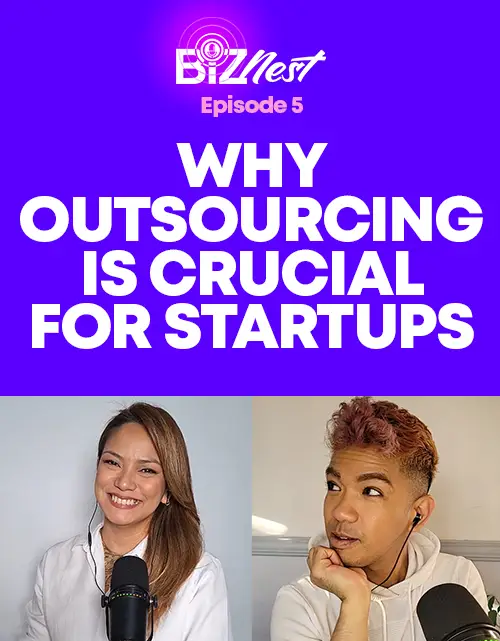
What is outsourcing, and why is it crucial for startups? Tune in because this week on #BizNest is all about outsourcing! For episode 5, Francis and Penny discuss the nature of outsourcing, including how it works and its benefits.

Season 2 | Episode 1
July 4, 2024
00:44:00
Today’s business landscape is getting more and more competitive. As a result, startups and small businesses are embracing remote teams. As these companies expand their reach globally..

Season 3 | Episode 4
April 2, 2025
00:45:00
What’s the one mindset shift that can change your business or career? Francis and Penny discuss different key mindset shifts that drive growth, including a heated argument…

Virtua Solutions is a Philippine-based team of outsourcing experts. We aim to bring the best Filipino talents to companies worldwide so these businesses can provide MORE to their own clients. Our services will meet your every business needs and we will bring the best remote teams wherever you are.
OFFICE ADDRESS
- Unit 3006 One Corporate Centre, Julia Vargas Ave., Ortigas Center, Pasig City, NCR 1605
EMAIL US
- marketing@virtuasolutionsos.com
Newsletter
Join our subscribers list to get the instant latest news and special offers.
© 2024 Virtua Solutions Outsourcing Co. All rights reserved